Let's talk about Ethics...
In every other aspect of life Ethics is important. Whether in personal life or in business, one aspect of ethical conduct is not discriminating against individuals based on their traits. One of the hardest one to notice is unconscious bias; unconscious bias in business can be difficult for a manager to notice and, most importantly preventing it from happening.
Let's take this into the context of assessing competencies...
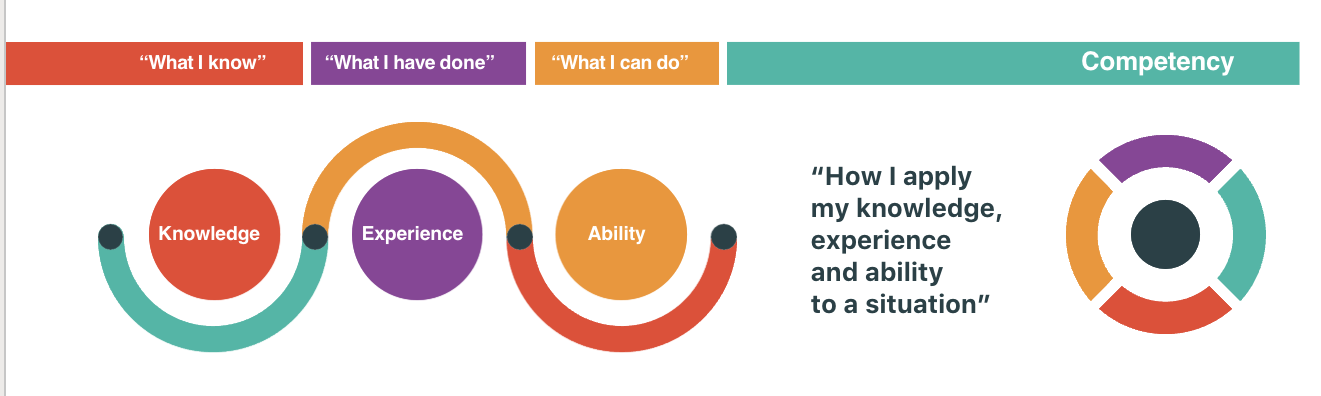
As competency is the ‘how’ a person applies their knowledge and experience to a specific activity in a specific context, the potential for bias, whether conscious or unconscious, can play a part in how that person’s competency is viewed. This can make both skills and competency assessments biased, where the competency management and assurance process itself is aiming to establish an objective view.
To take one famous example: the study conducted by Claudia Goldin and Cecilia Rouse[i], in which orchestra members were recruited through a blind audition process thereby greatly increasing the female musicians hired into the orchestra. Those musicians auditioning were judged solely on their playing ability with no visual clues to trigger unconscious biases in those hiring. All those auditioning had the skills to play at the orchestral level, and through the blind audition process it was only ‘how’ they played that was assessed.
To take another example, one that many women face every day: the use of language in emails. The recent post by Chief.comii provides a perspective on this. Does a person’s writing style detract or enhance their ability to do their role?
Of course, it is not just male / female unconscious biases that can come into play. Unconscious bias can cause discrimination based on ethnicity, disability, race, nationality and other characteristics (for example, see Bendrick & Nunesiii which looks at the recruitment process).
Let's look into the recruitment and succession processes: a person’s skills are not just assessed when they are hired. They are assessed when being considered for promotions and for projects; they are assessed when that person is being considered for further training or development opportunities. A person’s knowledge and experience may need to be periodically re-assessed, for example, to ensure it is current, as part of a certification process or as part of building a project team with the certain levels of competencies.
Now let's look at a different aspect - working on a project proposal and ensuring the right people at the right role level & competencies are considered. As well as ensuring that managers and the technical experts assessing a person’s competency – how that person applies their knowledge and experience to specific situations – gains an ethical dimension when the risk of unconscious bias is considered. The competency needs to be assessed as to whether it will meet or has met the standard the business requires, without constraining the ‘how’ to be a stereotyped answer. This is especially true for knowledge workers; and where the skill is being applied to a novel situation.
If the manager assessing someone’s competency does not consider the ‘how’ being demonstrated as valid then they should ask why the person is applying their skill in that manner. Everyone has unique traits and experiences that they bring to ‘how’ they do things and asking ‘why’ can reveal insights for example, as well has overcoming unconscious biases.
Fundamentally businesses need to design their competency frameworks in a way that are standards-based, at each level of competency; and manage the assessment process against these standards, keeping watchful oversight for unconscious biases creeping in.
Otherwise, businesses risk those most competent being passed over for opportunities in favour of those less competent. Not only does this risk the output of those roles but it may increase staff attrition as those passed over for opportunities seek them elsewhere; mis-match training & development needs with training budgets not making the impact being sought; reduce diversity in the company and reduce the feeling of inclusion, depriving the business of the creativity and innovation that different perspectives bring.
Contact the team at contact@sqeptech.com if you'd like to hear more about our approach to competencies and competency assessment.
[i] Goldin, C. & Rouse, C. (2000). Orchestrating impartiality: the impact of “blind” auditions on female musicians. The American Economic Review. 90(4), pp715-741.
.jpg)
.png)